
Pinochle
Topy GamesCard
4.5396.00 Reviews
- Version
- 2.2
- Installs
- 100.00K
- Age Rating
- Everyone 10+
Screenshots
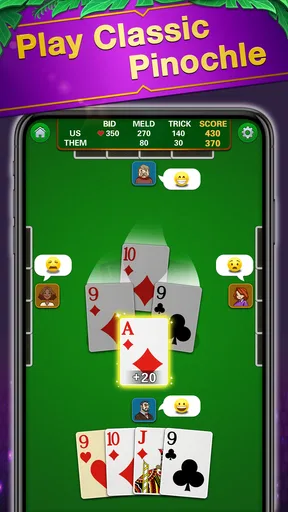
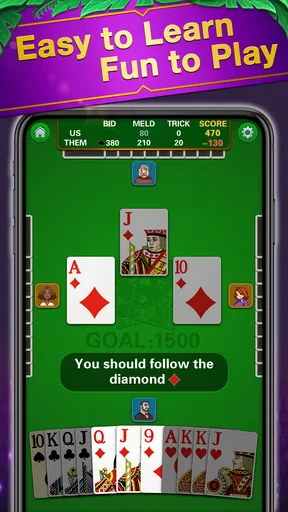
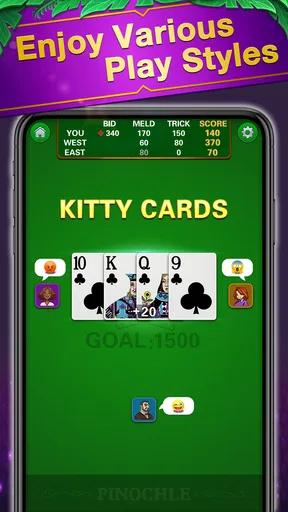
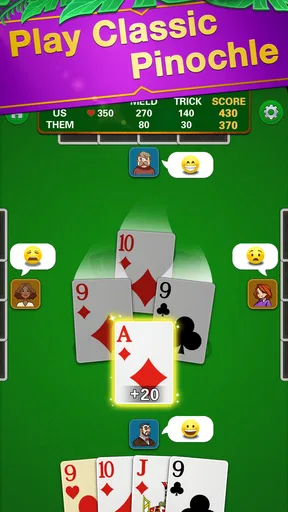
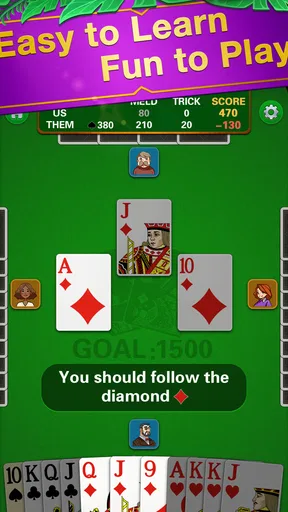
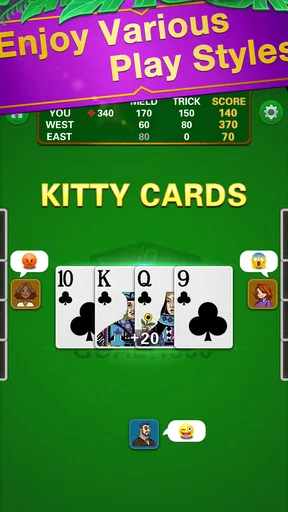
Our Review of Pinochle
 Analysis by Appyee
I found Pinochle most interesting as a low-pressure card game rather than as a flashy mobile production. Developed by Topy Games, it focuses on the traditional pinochle experience and lets me play against other people online or continue offline when I do not have a reliable connection. That simple promise gives it a useful place on a phone, especially for players who enjoy planning, memory and careful card management more than rapid reactions.
It is free to download, aimed at Everyone 10+, and currently sits at a 4.5 average from around 1.5 thousand ratings. Those figures suggest that the basic experience is working well for many players, but they do not tell the whole story. My opinion depends heavily on what you want from a card game: this is a better fit for someone seeking a recognizable pinochle table than for someone looking for a broad collection of games, elaborate presentation or constant novelty.
How the game feels to read and navigate
The most important accessibility question for a card game is whether I can understand the table quickly. Pinochle is naturally information-heavy: I need to identify suits, follow the current trick, remember which cards have appeared and keep track of the changing value of my hand. A clean layout matters more here than decorative animation, because every unnecessary visual distraction competes with the decisions I am trying to make.
In practice, I approach each hand by first checking my cards, then identifying the likely shape of my play before concentrating on the opponent's move. That rhythm is easier to maintain when the interface keeps the active cards and available choices visually distinct. New players should resist tapping immediately. Taking a short moment to scan the entire hand is more valuable in pinochle than reacting to the first playable card that catches the eye.
The game is also easier to understand when I treat navigation and gameplay as separate tasks. Before starting a serious match, I would spend a few minutes learning where the offline and online choices sit, how a hand advances and where the score is shown. That small preparation reduces the mental load later, particularly for anyone who is not comfortable switching between screens or searching for controls while a match is already in progress.
For players with reading difficulties, card games can create a particular problem: the symbols may be familiar, but the meaning of a move depends on several pieces of information at once. I find it helpful to slow down and use a consistent checking order—rank, suit, legal response and likely consequence. This is not a special mode, but it is a practical workflow that makes the game more manageable than trying to process the whole table randomly.
The age rating of Everyone 10+ also gives families a general indication of the intended audience, although younger players may still need help with the rules and scoring. Pinochle is not the kind of game I would hand to a child expecting an instantly obvious casual puzzle. Its challenge comes from understanding the card logic, not from learning a single gesture.
Learning the table without rushing
One of the strongest ways to make a traditional card game more approachable is to separate learning from competition. I would begin offline, where the pace feels more forgiving, and use early hands to observe how the game presents legal actions and scoring. That approach is particularly useful for someone returning to pinochle after years away, because it refreshes practical decision-making without the embarrassment of making basic mistakes in front of another player.
There is also a benefit for experienced players. Offline play is not only a beginner's space; it can be a testing table for unusual approaches. I can use it to rehearse how aggressively I want to pursue a hand, compare conservative and risky choices, or simply get comfortable after not playing for a while. The absence of a social opponent makes experimentation less stressful.
Players who rely on larger text, stronger contrast or magnification should judge the card presentation on their own device rather than assuming that a traditional card layout will suit every screen. A larger phone may make the hand easier to inspect, while a small display can turn suit recognition into a tiring task. I would check the first few hands in comfortable lighting and avoid deciding based on a quick glance at the menu alone.
Motor, sensory and attention demands
Pinochle is gentler on motor skills than an action game because it does not depend on rapid swipes, precise timing or continuous movement. I can think before committing to a card, which makes it suitable for players who prefer deliberate interaction or who find fast games physically tiring. The main motor challenge is accuracy: selecting the intended card among several closely arranged choices is easy when the hand is clear, but less comfortable on a cramped screen.
That distinction matters for people with tremors, limited dexterity or difficulty making small taps. A slower game helps, but it does not remove the need to select a particular card. Holding the phone securely, using a stable surface and playing in portrait or landscape orientation according to whichever gives the hand more room can make a noticeable everyday difference. I would also avoid playing while walking or carrying something, since a card game rewards attention and a missed tap can change the hand.
For sensory comfort, the absence of action-game pressure is a clear advantage. There is no need to track a rapidly changing world, and the turn-based nature gives me time to look away briefly and return to the table. That makes it a reasonable companion for a quiet break, a commute with a stable seat or an evening when I want something engaging without intense visual motion.
Still, card recognition can be tiring for players with low vision or color-vision differences. Suits are not merely decoration; they affect what I can legally or strategically play. I would not recommend relying on color alone when identifying cards. Instead, I would confirm the suit symbol and rank directly, enlarge the view if the device allows it and play in even light. If the cards remain difficult to distinguish after those adjustments, this particular format may become frustrating rather than relaxing.
Attention is another hidden factor. A hand can look simple while requiring memory of earlier plays and awareness of the score. I find that the game works best when I am not dividing my attention between a conversation, a video and the table. Someone with attention difficulties may enjoy the slower pace, but may also benefit from shorter sessions and a written reminder of the current objective. Treating each hand as a small decision cycle is less overwhelming than trying to remember the entire match at once.
Why offline play changes who can enjoy it
The offline option is more than a convenience for people without constant internet access. It changes the social pressure of the game. I can play during a weak signal, on a trip, or in a place where online interaction is impractical. It also gives me a private environment to learn the rules and discover whether the game suits me before I commit to playing with other people.
That flexibility helps players whose schedules or circumstances make live online sessions unreliable. A parent waiting during an appointment, a traveler on a train or someone taking a short break at work can start a hand without needing to coordinate with another person. The trade-off is that offline play cannot reproduce the unpredictability or social energy of a human opponent, so regular players may eventually prefer online matches when they want a more lively challenge.
Online play has a different accessibility profile. It can connect me with opponents beyond my immediate circle, but it may also introduce time pressure, interruptions or anxiety about making mistakes publicly. I would recommend beginning offline, then moving online when the card flow feels familiar. That progression is especially sensible for players who need extra time to read the table or who want to build confidence before competing.
Everyday situations where it works well
My favorite use case is a short, quiet session at home when I want a game with decisions but no complicated setup. I can open it, play a few hands and stop without needing to arrange cards on a table. It also works well as a digital replacement for a physical pinochle deck when friends or family are not nearby, although the online experience is naturally different from sitting together and talking across a table.
Another good scenario is learning with someone who already knows the game. One person can explain the reasoning behind a move while the other plays offline, pausing between hands to discuss what was missed. That is more useful than simply memorizing rules because pinochle strategy depends on reading the hand and anticipating what may still be held. The app becomes a practice surface rather than just a way to pass time.
For a player with limited energy, the game can be divided into manageable sessions. I would stop after a hand or two if concentration starts to fade, rather than continuing because the match is already underway. Card games reward patience, but they also punish tired decisions. The ability to play offline makes it easier to return later instead of forcing a long sitting.
It is less suitable for a noisy group gathering where everyone wants immediate, shared entertainment. A physical deck may be better there because people can see one another, handle the cards and discuss the game naturally. A different mobile card title may also be preferable for someone who wants quick rounds, bright effects or several rule sets in one package. Pinochle's appeal is its focused identity, not variety.
Practical trade-offs before choosing it
The game is free, which makes trying it straightforward, but it includes in-app purchases priced at $1.99 per item. I would approach those purchases cautiously and decide first whether the core card experience already meets my needs. A free entry point is valuable for testing readability, comfort and rule familiarity on a particular phone; there is no reason to spend before knowing whether the interface works for my eyes and hands.
The current version is 2.2 and it runs on Android 7.0 or later. That broad compatibility makes it available to people using older Android devices, although age alone does not guarantee a comfortable display. Performance, screen size and touch response still affect how easy it is to select cards. On an older phone, I would test a complete hand rather than judging only how quickly the opening screen appears.
The game's audience size is also substantial, with over one hundred thousand installs, and it has 397 reviews alongside its rating. I see that as a sign that the app has found a real audience, not as proof that every player will find the same level of comfort. Card layouts are personal: a design that feels obvious to one person may look crowded to another, especially when vision, dexterity or attention varies.
One trade-off that is easy to miss is the difference between understanding the rules and making good decisions. An app can make legal moves clear while still leaving strategy to the player. That is appropriate for a traditional card game, but beginners should not mistake a smooth first session for mastery. I would keep early expectations modest and focus on recognizing patterns, remembering played cards and learning when a safe choice is preferable to a clever-looking one.
Another trade-off involves social comfort. Online play can provide the opponent I need when no friend is available, yet it may not offer the same patience as a familiar partner. If I need extra time to inspect cards, offline play is the safer starting point. If I want human unpredictability and do not mind the pressure of a live match, online play becomes more attractive. Neither mode is universally better; they serve different moods and abilities.
Who should choose it and who should skip it
I would recommend Pinochle to someone who already likes traditional card games, wants a focused pinochle experience and values the choice between online and offline sessions. It is also worth trying for a learner who prefers practicing privately before facing another player. People who enjoy thoughtful turns, memory-based decisions and a familiar deck structure are likely to get more from it than players who need constant stimulation.
I would be more hesitant to recommend it to someone who cannot comfortably distinguish small card symbols, needs strong built-in assistance or wants a game designed around rapid, simple taps. I would also point casual players toward another option if their priority is a large collection of card games rather than one specific tradition. Pinochle asks for attention and patience; that is its character, but it is also its main barrier.
For families, the Everyone 10+ rating is a useful starting point, but an adult may still need to explain the rules and help a new player interpret the table. For older adults returning to card games, the offline mode and deliberate pace may be appealing, provided the cards are comfortable to read on the available device. I would test it together rather than assuming that familiarity with physical cards automatically translates to a phone.
A focused and reasonably inclusive card table
After spending time with it, I see Pinochle as a practical digital table for a specific kind of player. It does not try to hide the thinking that makes the card game interesting, and that is both its strength and its limitation. The slower rhythm supports people who dislike reflex-based play, while offline access opens the door to situations where online gaming is inconvenient. Those choices make it more flexible than the short store label suggests.
Its inclusive potential is strongest when I control the pace, use a comfortable screen and treat offline play as a learning space. Its remaining barriers are equally clear: card symbols must be readable, individual selections must be accurate and sustained attention still matters. I would not describe it as automatically accessible for everyone, but I would describe it as easier to adapt to different routines than a game that depends on speed or constant visual motion.
My final recommendation is conditional but positive. If you want a free, focused pinochle game that works for both connected and disconnected play, Topy Games' release is worth trying. Start with a few offline hands, check whether the card layout is comfortable, and only then decide whether online matches or optional purchases add value for you. If the symbols are hard to read or you are seeking a faster, more social or more varied card experience, another game will probably suit you better.
For me, the appeal is its restraint. It gives pinochle room to be thoughtful instead of burying the card decisions under unnecessary spectacle. That will not satisfy everybody, but for the right player it creates a calm, portable way to practice, compete and enjoy a familiar game on their own terms.
Verdict
Strengths of Pinochle
- Supports classic Pinochle rules for an authentic card-game experience.
- Quick rounds make it suitable for short breaks or casual play.
- Clear card layouts help you follow melds, tricks, and scoring.
- Useful for practicing bidding and decision-making without real stakes.
- Runs well as a lightweight game on many mobile devices.
Limitations of Pinochle
- Rules and scoring may feel confusing for players new to Pinochle.
- Limited variation can make matches feel repetitive over time.
- Computer opponents may not offer a consistent challenge for experts.
- Some features may require an internet connection or contain ads.
- Small screens can make detailed card information harder to read.
Other Releases by Topy Games
View All

Spelling Quiz - Word Trivia
Word4.8

Trivia Master - Word Quiz Game
Trivia4.5

Gin Rummy: Classic Card Game
Card4.9
Similar Picks in This Category
View All
Solitaire - Classic Card Games
MobilityWare4.6

UNO!™
Mattel163 Limited4.3

Spider Solitaire: Card Games
MobilityWare4.6

Solitaire.com - Classic Cards
Tripledot Studios Limited4.7

Plants vs. Zombies™ Heroes
ELECTRONIC ARTS4.1

Hearthstone
Blizzard Entertainment, Inc.4.1
Frequently Asked Questions
What is Pinochle, and how is the game played?
Pinochle is a classic trick-taking card game that combines bidding, melding, and strategic play. Depending on the version, you can play against computer opponents or compete in multiplayer matches. Before downloading, remember that rules may vary between single-deck and double-deck formats, including the number of cards, scoring system, and available bidding options. The app usually provides tutorials or help screens for new players.
Can I play Pinochle offline without an internet connection?
Many Pinochle apps offer an offline mode against artificial-intelligence opponents, making them useful for travel or moments without Wi-Fi or mobile data. However, offline availability depends on the specific version and may not include online leaderboards, multiplayer rooms, daily challenges, or account synchronization. It is worth checking the app description and testing airplane mode after installation if offline play is important to you.
Does the Pinochle app support multiplayer games?
Most modern Pinochle applications include some form of multiplayer, although the exact features can differ considerably. You may find private tables with friends, public matchmaking, ranked games, or invitations through a room code. Some multiplayer functions require an internet connection, registration, or an in-app purchase. Check whether the app supports real-time play, turn-based matches, and cross-platform competition before downloading.
Is Pinochle suitable for beginners who have never played before?
Pinochle can be challenging at first because players must learn card rankings, bidding, meld combinations, trick-taking strategy, and scoring. A well-designed app should make the learning process easier with tutorials, rule explanations, practice games, and adjustable difficulty levels. Beginners should start with basic matches against easy computer opponents and review the scoring guide carefully, since incorrect bidding or missed melds can quickly affect the final result.
Are there advertisements, purchases, or privacy concerns in Pinochle?
The business model depends on the particular Pinochle app. Free versions may display banner or video advertisements, while optional purchases can remove ads, unlock themes, provide extra statistics, or enable premium multiplayer features. Before installing, review the store listing for in-app purchases, account requirements, and data-collection details. Also check whether the app requests permissions unrelated to gameplay, such as access to contacts, location, or unnecessary device information.
Play our best games!


